
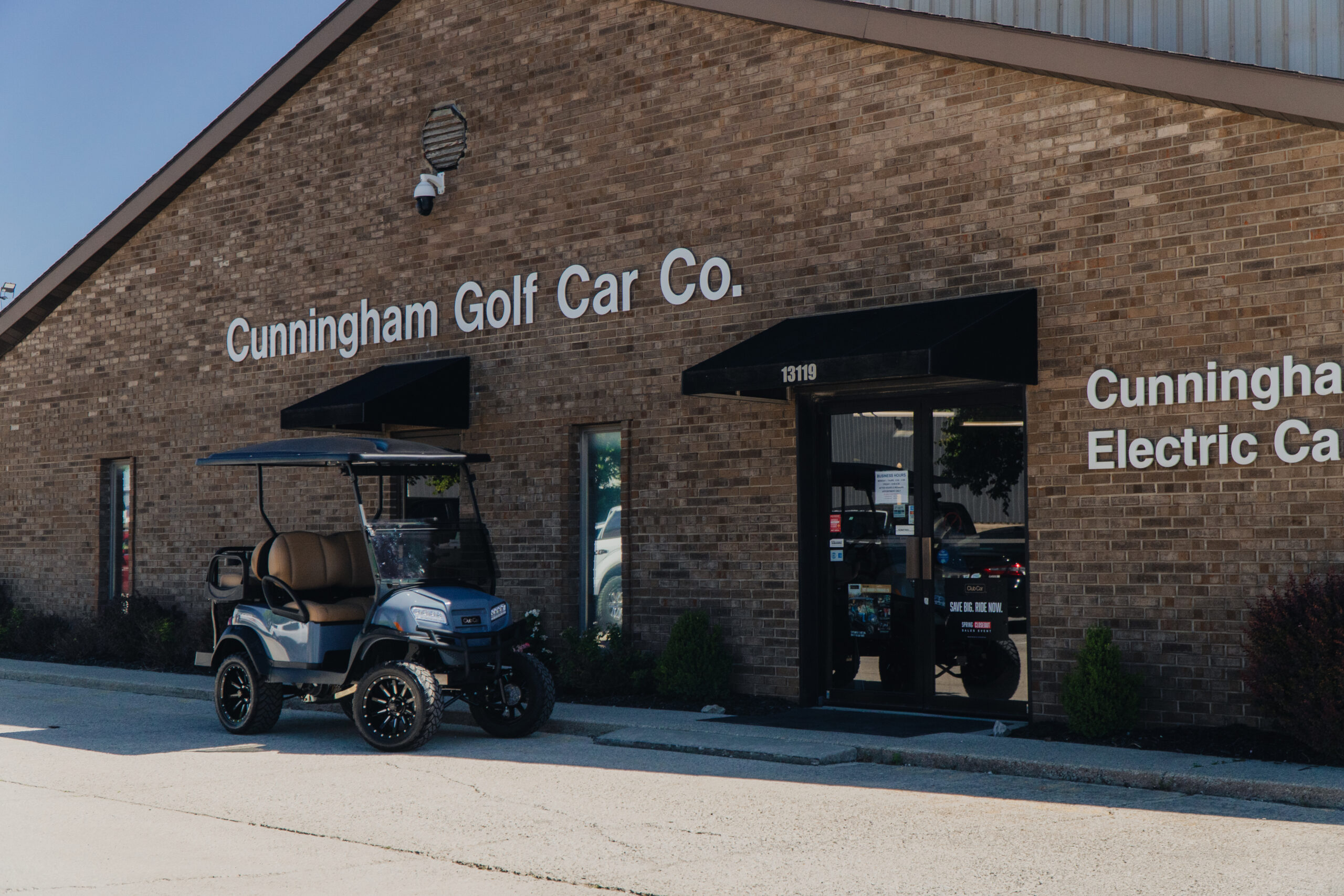
A while back a fellow called me. He’d been shopping on Facebook Marketplace and thought he’d found a heck of a deal on a golf cart. Way below what he’d been seeing anywhere else. He sent me the model number and a picture of the serial. Something didn’t sit right about it. The body style he was describing didn’t quite match the model number. I asked him to send me a clearer shot of the serial. We ran it.
Those carts were stolen. From one of our locations, actually. The seller had swapped the bodies to throw people off, but the serial numbers told the story.
That’s the extreme end of what can go wrong on Marketplace. Most of the time it’s not that dramatic. Most of the time it’s just a cart that runs fine on the test drive but has something expensive about to go, and the buyer doesn’t find out until three months in when the bill lands.
This post is about that. What we see when we look at a used cart that a customer is thinking about buying somewhere else. What the real risks are. And why the price on the Marketplace listing is almost never the price you actually end up paying.
The test drive tells you almost nothing
Here’s the thing about a golf cart. A test drive around somebody’s driveway for five minutes tells you it runs. That’s it. It doesn’t tell you the clutch is one hard hill from failing. It doesn’t tell you the batteries are on their last few months of useful life. It doesn’t tell you whether the previous owner turned the governor wide open and ran the cart at full output for a year, which is the mechanical equivalent of driving your pickup in first gear on the highway.

We look at hundreds of used carts a year. There are things we know to check that most buyers never think about.
The clutch is a big one. Certain clutches wear in a specific pattern, and once you know what to look for you can spot a clutch that’s got maybe six months left in it. That repair alone can run you eight or nine hundred dollars once you factor in the labor. The buyer who paid three thousand for a Marketplace cart didn’t save any money. They just moved the cost from the purchase price to the repair bill.
Brakes are another one. The 2008 through 2013 Yamaha Drive is a beautiful little cart, but it uses a wet brake system that’s harder to find parts for now. If the brakes on one of those carts go, you can end up in a spot where nobody makes the replacement parts anymore and you’re either paying premium for whatever’s left in the aftermarket or you’re stuck with a cart you can’t safely drive.
Frame and rivet condition matters too. A cart that spent time in Florida after a hurricane and got moved north to sell has a different kind of corrosion than one that lived its whole life in Kentucky. If you know what you’re looking at, you can see it. If you don’t, the cart looks fine until it starts falling apart in year two.
The math nobody does before they buy
Almost every buyer who ends up with a bad Marketplace cart makes the same mistake. They compare the purchase price to the price of a comparable cart from a dealer, see the gap, and assume they saved the difference. What they don’t do is add up what they’re likely to spend fixing the cart over the next two or three years.
A five-year-old cart from a private seller might need a set of batteries in year one. That’s real money. It might need brakes, a clutch, a controller, or a charger. Any one of those is a service call plus parts. If the seller has been mostly honest and the cart is in genuinely good shape, maybe you get away with just the batteries. If the seller was less than honest about what’s coming due, you can spend more on repairs in year one than you would have spent buying a better cart from us in the first place.
The other thing people don’t account for is time. Every trip to a service center is a Saturday you’re not using the cart. Every diagnosis is a wait. If the cart lives at your lake place and needs to come home to Louisville or Calvert City to get fixed, that’s transport too. None of that shows up on the Marketplace listing.
Why we can price Certified Pre-Owned (CPO) carts the way we do
 People sometimes ask why a certified pre-owned cart from Cunningham costs more than a comparable cart on Marketplace. Fair question. Here’s what’s actually different.
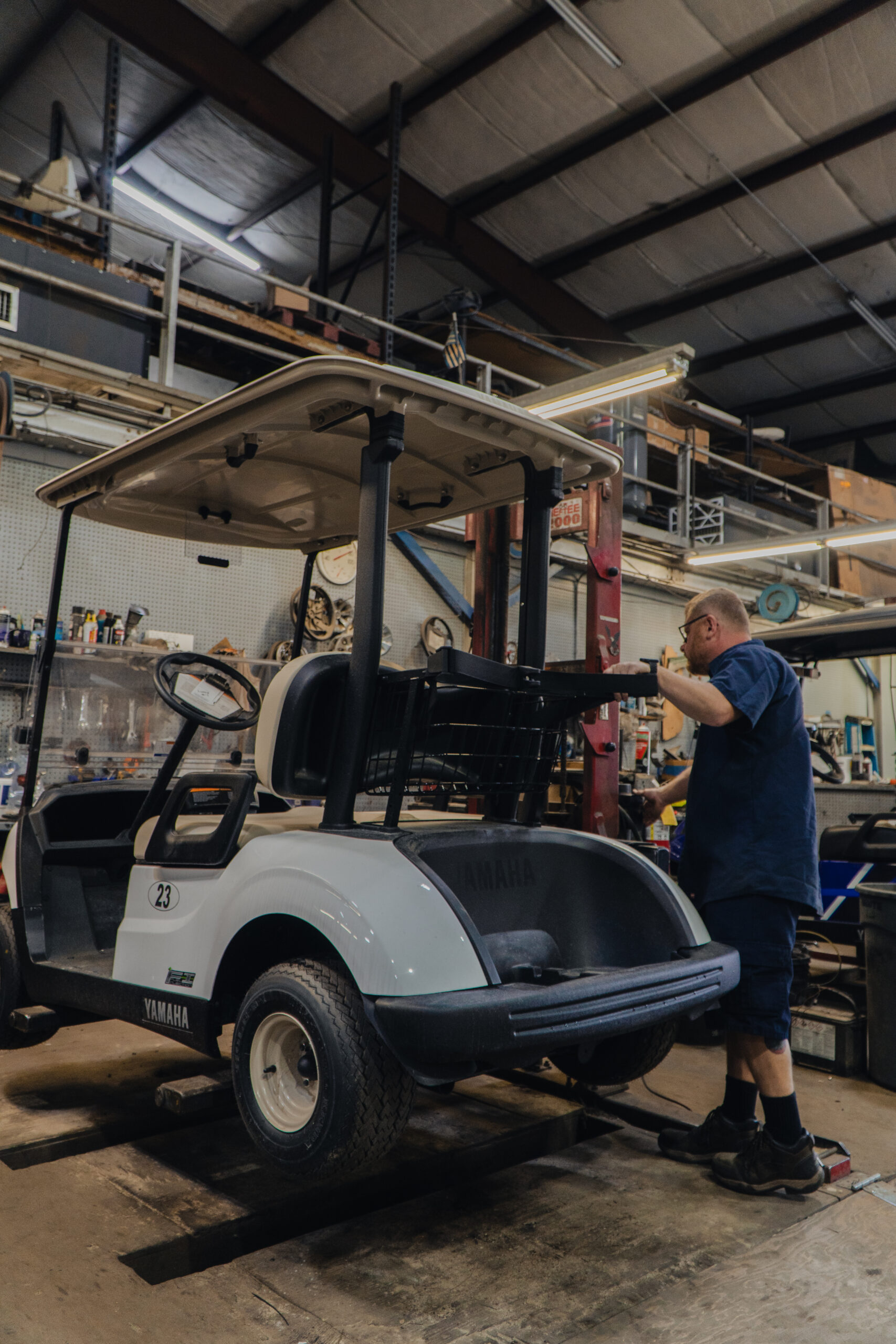
When a cart comes through our CPO program, it goes through our service department before it hits the sales floor. Our technicians look at the same things I mentioned above. They systematically work through a reconditioning checklist with 25 to 35 items on it, depending on model. Clutch condition. Brakes and brake lines. Batteries and their actual state, not just what the seller said. Frame, panels, wiring, controller, charger, tires. We test-drive it, we put it on a lift, we look for the things that would cost you money six months from now. If something needs fixing, we fix it. If something needs replacing, we replace it.
The cart that comes out the other end has a warranty on it. It has a documented history. And if something goes wrong, we’re the ones you call, not a stranger who’s already spent your money and stopped answering his phone.
That’s what you’re paying the difference for. Not the brand, not the badge, not the showroom lights. You’re paying for the fact that we already found and fixed the things that would have blindsided you.
When Marketplace is actually a good option
I want to be fair here. Marketplace isn’t always a bad idea.
If you know what you’re looking at mechanically, if you’re comfortable turning a wrench, if the seller is somebody local you can verify, and if you have realistic expectations that a used cart bought private is going to need some work, Marketplace can genuinely be a good way to save some money.
I’ve had customers come in and tell me they found a great deal on Marketplace and ask if I’d take a look before they buy it. Sometimes I say, yeah, that’s actually a solid buy, you got lucky. Sometimes I say, walk away. Either way, if you have a way to get a second set of eyes on a cart before you hand over the cash, do it. That fifteen minutes might save you three thousand dollars.
Where Marketplace goes wrong is when a buyer who doesn’t know carts assumes that all used carts are basically the same, and that price is the only thing that varies. Carts are not all the same. Two carts of the same model and year can be in wildly different mechanical condition, and the seller almost never volunteers that information.
What to actually do if you’re shopping used
If you’re set on buying used, here’s my honest advice.
Ask for the serial number. Not the model number. The serial. A legitimate seller will give it to you without hesitation. If they get cagey about it, that tells you something.
Look at the batteries with a flashlight. If they’re crusty around the terminals, if the water levels are wildly different from cell to cell, if the plastic looks bulged or warped, those batteries are near the end of their life. That’s real money coming out of your pocket, sooner than you’d like.
Try to hear the cart before it’s warmed up. A cold start reveals a lot. A cart that’s been running for twenty minutes before you show up may be hiding a starting problem.
Test drive it on a hill if there’s one nearby. Flat driveways don’t show you much. Any weakness in the drivetrain shows up under load.
And if you’re at all unsure, bring the cart to us before you buy it. Or bring us the listing. We’re happy to take a look and tell you what we see. If it turns out to be a great cart, we’ll tell you that. If it’s got problems the seller didn’t mention, we’ll tell you that too. Either way, you’ll know what you’re walking into.
|
Thinking about a used cart?: Bring the listing, bring the serial number, or bring the cart itself. We’re happy to take a look and give you an honest read before you buy. It takes fifteen minutes and can save you thousands of dollars. |
The bottom line
A cart on Marketplace at half the dealer price isn’t half the value. Sometimes it’s a great deal and sometimes it’s a mess waiting to happen, and the buyer usually can’t tell the difference. The dealer difference isn’t really about the showroom. It’s about the inspection, the fix, the warranty, and the phone call you can make when something goes sideways.
That’s what our certified pre-owned program is built around. When a used cart comes through our CPO process, it goes through our service department first. Our technicians check the clutch, the brakes, the batteries, the frame, the wiring. Anything that needs fixing gets fixed. Anything that needs replacing gets replaced. What you drive off the lot is a used cart with the surprises taken out and a warranty behind it.
If you’re shopping used and want to see what that looks like at a real price, come take a look at what’s on our CPO lot. Louisville or Calvert City. Or give us a call and we can walk you through what’s available for what you’re looking for.
A few quick answers
Is buying a golf cart on Facebook Marketplace safe? It can be if you know what you’re looking at, verify the seller, and get the serial number. It’s risky if you’re relying on a five-minute test drive to tell you the condition of the cart.
What should I check on a used golf cart before buying? Serial number, battery condition, clutch and drivetrain, brakes, frame and rivet condition, and the cold start behavior. A twenty-minute test drive on varied terrain is worth more than a five-minute drive around a driveway.
Why does a CPO golf cart from a dealer cost more than a private-seller cart? Because a CPO cart has been inspected, serviced, and repaired before sale, and comes with a warranty. The dealer price includes the work that would otherwise show up as your repair bill six months later.
Can you inspect a cart I’m thinking about buying elsewhere? Yes. Bring the cart, the listing, or the serial number and we’ll take a look and give you an honest read. It takes about fifteen minutes.
What’s the biggest mistake people make buying used? Assuming all used carts of the same model and year are in similar condition. Two identical-looking carts can be in wildly different mechanical shape, and the seller usually can’t or won’t tell you the difference.

