
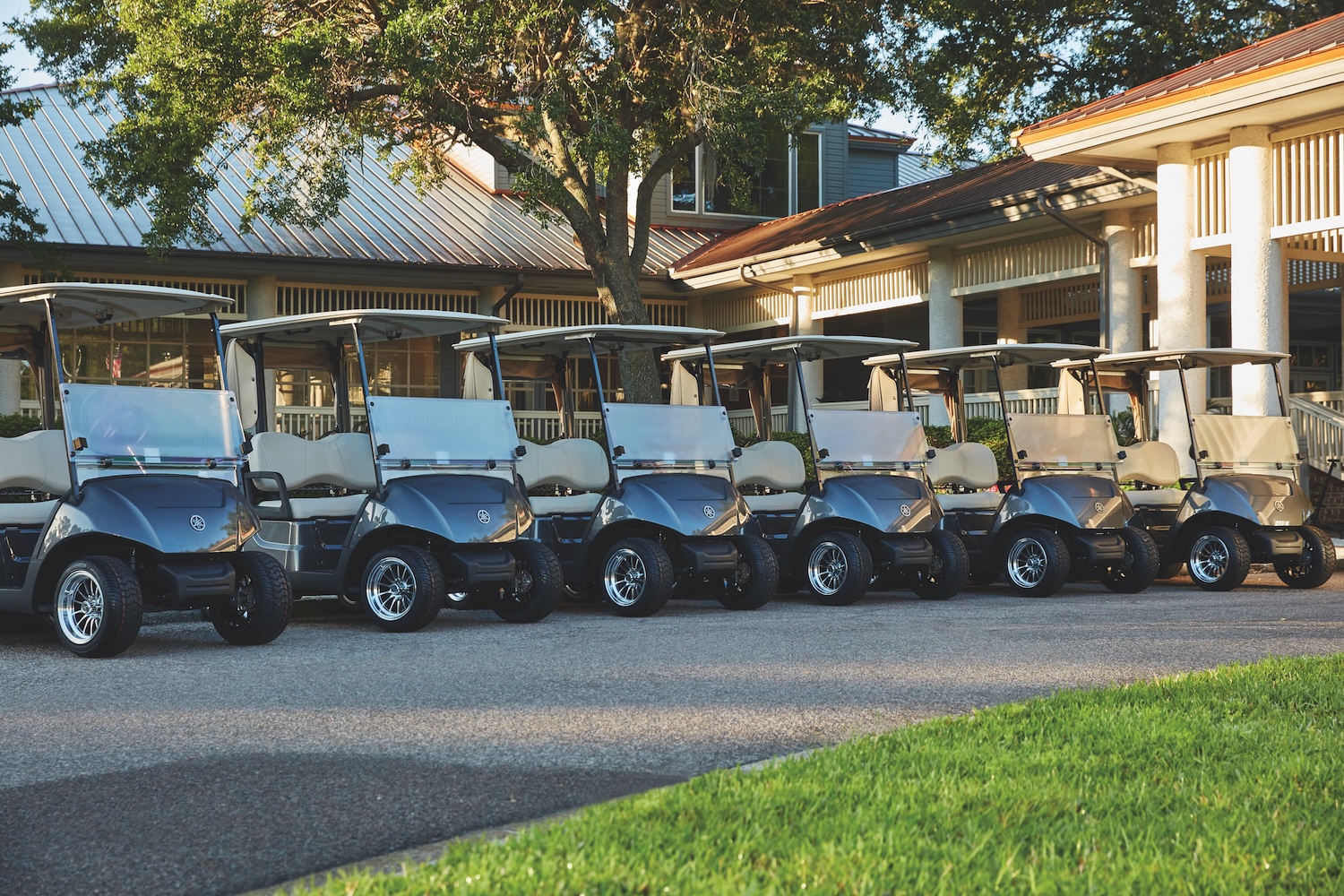
If you’re the person responsible for a fleet of golf carts or utility vehicles at a Kentucky facility, you already know the job isn’t really about the vehicles. It’s about downtime. It’s about getting your operations, campus safety, grounds crew, or event staff where they need to be without the fleet becoming the reason things fall behind.
This post is for the person managing five, ten, twenty, or fifty carts at a university or college campus, an industrial or manufacturing facility, an apartment or residential community, a corporate campus, a municipal operation, a park, or an event venue somewhere across Kentucky. It’s not a spec sheet. It’s what we’ve learned over decades of supporting commercial fleet accounts about what actually drives the total cost and the total headache of owning them.
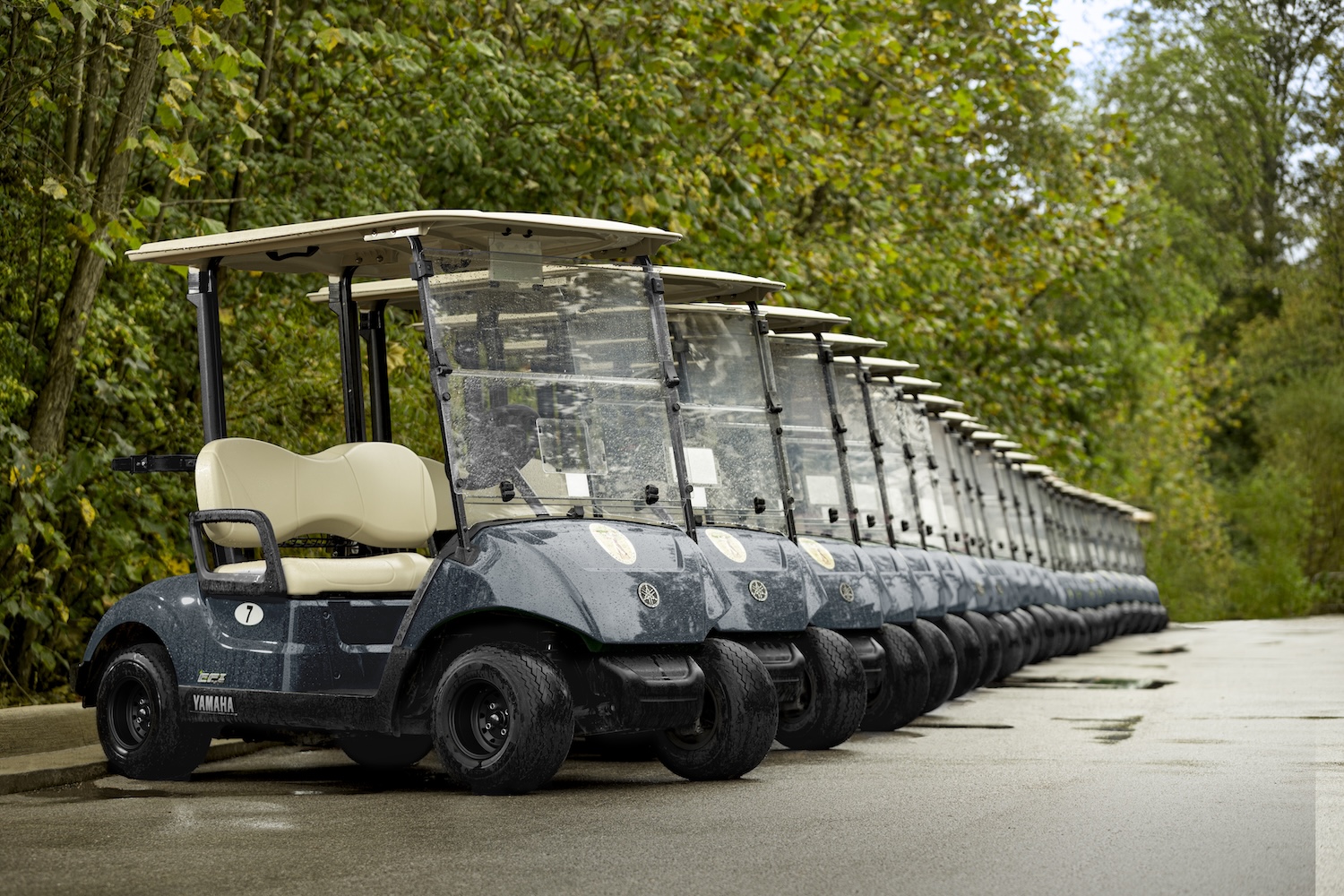
Uptime is the metric that matters
The purchase price of a fleet vehicle is the number that gets attention during procurement. It’s rarely the number that matters most over the life of the fleet.
The number that matters most is how many days per year a given vehicle is out of service. Every day a cart is down, one of two things is happening. Either your team is short a vehicle and something isn’t getting done, or you have an extra cart sitting idle to cover the gap, which means you’re paying to own more vehicles than you actually need. Both are expensive. Neither shows up on the invoice.
The fleets that run well aren’t the ones with the newest vehicles. They’re the ones with a service relationship that keeps the fleet moving. Fast response when something breaks, parts in stock so a repair doesn’t turn into a two-week wait, and a proactive maintenance rhythm that catches problems before they become breakdowns.
When you evaluate a dealer for a fleet purchase, the questions worth asking aren’t really about the vehicles. The vehicles are largely a known quantity if you’re looking at Yamaha or Club Car. The real questions are about service. What’s the turnaround on a service call? What’s the parts inventory at the local warehouse? Is there a loaner arrangement if a vehicle needs to be out for extended repair? Who’s your point of contact when you need something moved to the front of the line?
The platforms most commercial fleets standardize on
Universities, industrial facilities, municipal operations, residential communities, and corporate campuses have converged on Yamaha and Club Car for reasons that hold up over time. Both companies have built purpose-designed platforms for commercial use, both have long parts availability, and both have the authorized service networks that fleet managers actually need.
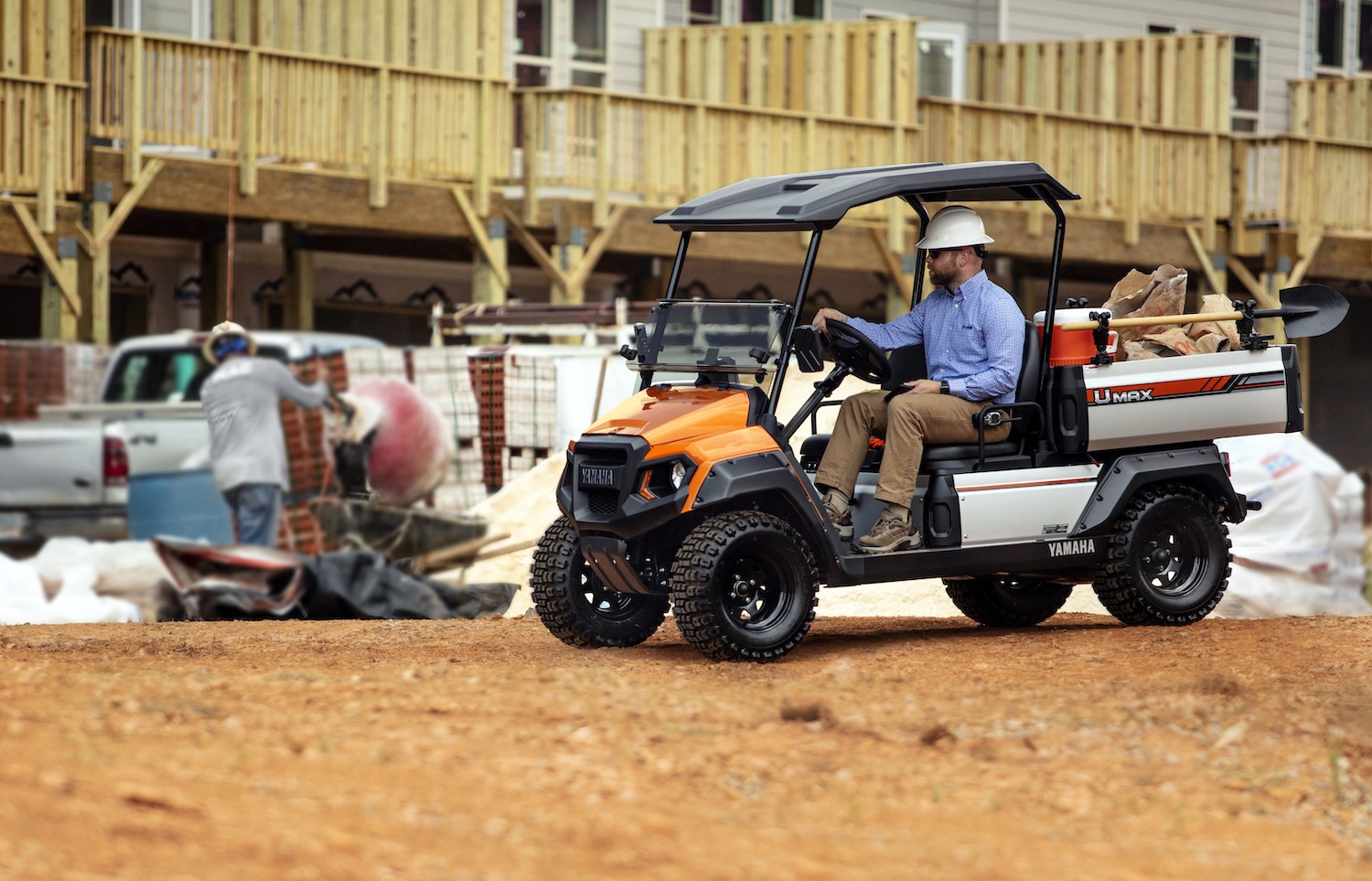
Yamaha’s commercial platform is the UMAX. It’s built for utility work, not just passenger transport. Cargo capacity, towing, and durability are engineered in from the start. If your fleet needs to haul equipment, move materials around a campus or plant, or support grounds and facilities maintenance, the UMAX is designed for that kind of use.
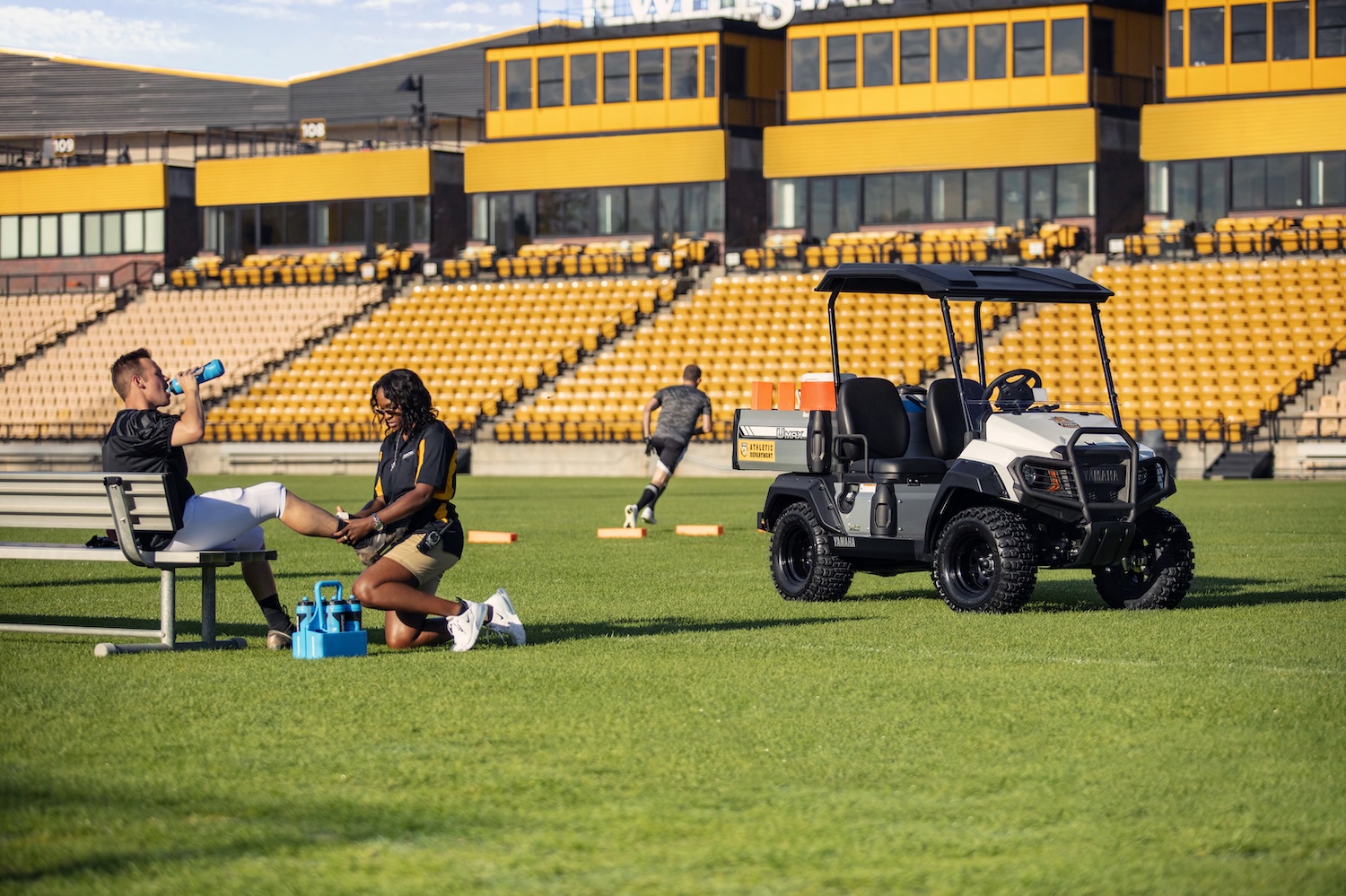
Club Car’s commercial line is the Carryall. It’s similarly purpose-built. The Carryall 500 is a mid-size utility platform that handles most typical facility use. The Carryall 700 steps up when you need more capacity. Both are proven in institutional and industrial fleets across the country.
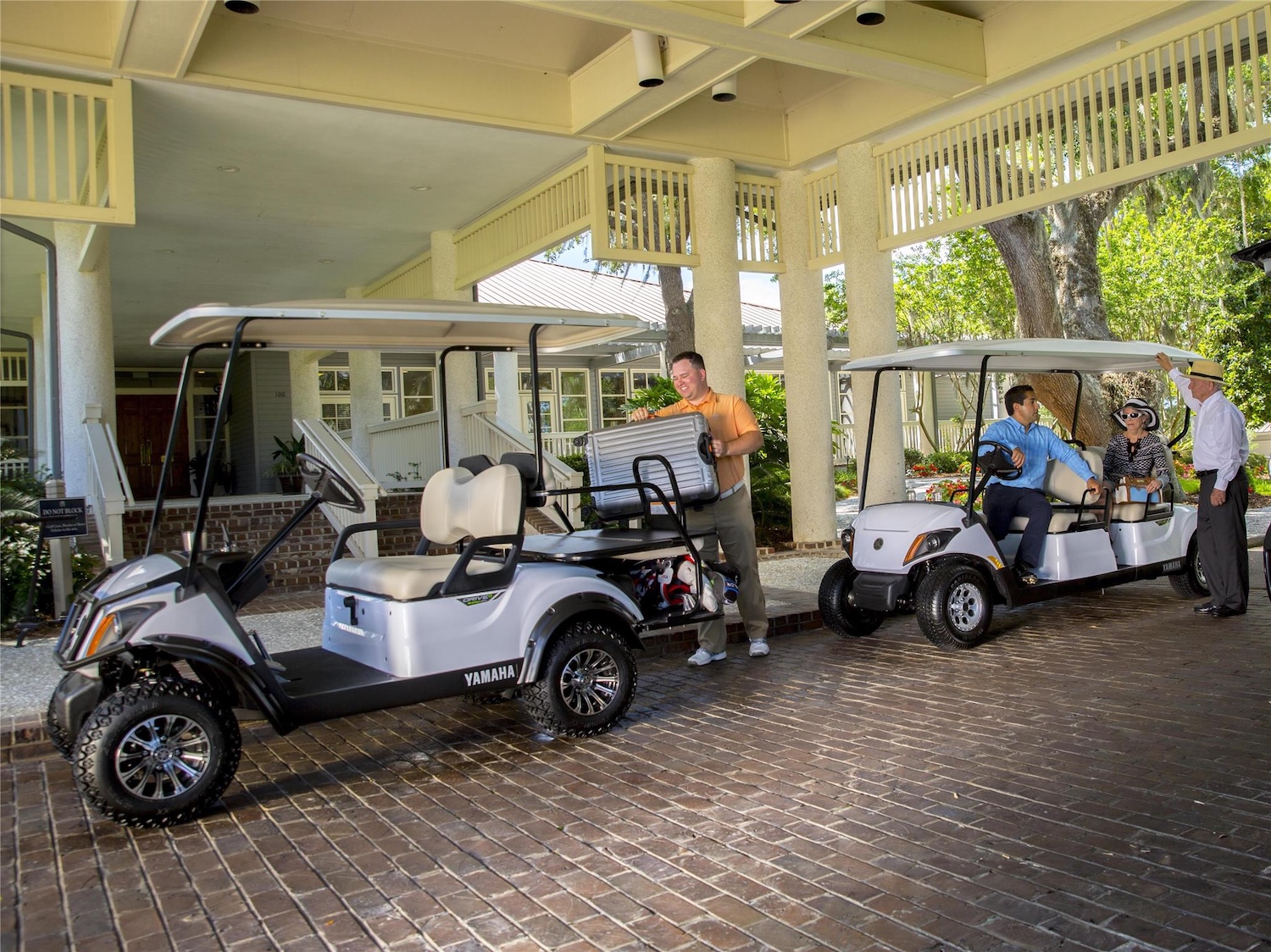
For passenger-focused fleets, like a residential community that moves residents between buildings, a large corporate campus that provides employee transport, or a facility that shuttles staff and visitors, the Yamaha Drive2 and Club Car Onward are strong choices. Both are quiet, comfortable, and built for high-cycle use.
Cunningham is an authorized Yamaha and Club Car dealer, and we support commercial fleet accounts across Kentucky from our Louisville and Calvert City locations. Being authorized for both brands matters more than people realize when you’re managing a mixed fleet or evaluating standardization decisions. You get real product knowledge on both sides of the comparison, not a sales pitch for whichever brand the dealer happens to carry.
Gas, lead-acid, or lithium for fleet use
The powertrain decision matters differently for fleets than for individual buyers.
Gas fleets are the simplest to manage. Fuel logistics are the same as the rest of your equipment, uptime is easy to plan around, and you don’t need to invest in charging infrastructure. For fleets that need to run long shifts, cover large properties, or operate in areas without easy charging access, gas is often the right answer.
Lead-acid electric fleets have the lowest up-front cost per vehicle among the electric options. They require more maintenance than lithium (watering schedules, equalization charges, terminal cleaning) which for a fleet becomes a real labor line item. If you have the maintenance capacity in-house or through a service contract, lead-acid can still make sense.
Lithium is where a lot of commercial fleets are moving, especially for high-cycle applications like campus transport or shift-based utility work. Lithium eliminates the battery maintenance, holds performance across the full charge cycle, and lasts significantly longer than lead-acid before replacement. The upfront cost is higher, but for a fleet running heavy annual hours, the total cost of ownership over an eight to ten year lifecycle often favors lithium.
The right answer depends on your specific use profile. A campus running heavy daily transport has a different math than a facility with light utility use a few times a week. We work through this analysis with fleet accounts as part of a consultation, because the honest answer isn’t the same for every operation.
Where fleet buyers get in trouble
A few patterns come up repeatedly when we’re helping a new fleet account clean up problems inherited from a prior arrangement.
Buying on price alone. The cheapest fleet quote almost always turns into the most expensive fleet over five years. It’s usually cheap because it’s an unauthorized brand with poor parts support, or because it’s a lease structure that looks attractive on paper but doesn’t include service, or because the dealer isn’t set up to actually support a commercial account. Save money on the purchase, spend it two-fold on downtime and repairs. It’s a pattern we see almost every year.
Skipping the service conversation. If your fleet quote doesn’t include a documented service response commitment, you don’t have a fleet relationship. You have a sales transaction. Fleet operations are different from retail service. You need to know that when a cart is down at 8 a.m., somebody is picking up the phone and telling you when it will be back running.
Not planning for the replacement cycle. Fleet vehicles have a lifecycle that depends heavily on hours of use and duty cycle. Fleets that don’t plan replacement cadence end up with a large chunk of the fleet aging out simultaneously, which turns into a capital expenditure crisis. A good fleet partner helps you stagger replacement so you’re not replacing a dozen vehicles in one budget year.
Treating all commercial vehicles as interchangeable. A cart configured for passenger transport is not the same as a utility vehicle designed for a maintenance crew. Buying the wrong platform for the actual use case is one of the most common expensive mistakes we see.
The consultation approach
For fleet accounts, we don’t send a quote first. We talk through the operation first.
What are you trying to accomplish with the fleet? What are the pain points in your current setup? What does downtime actually cost your operation, in real dollars, per day? What’s your replacement cadence looking like? What does your service relationship need to look like to keep the operation running?
Once we understand the operation, we can recommend the right platform, the right powertrain, the right service structure, and the right lifecycle plan. Sometimes the right answer is a straight fleet purchase. Sometimes it’s a phased replacement over multiple budget years. Sometimes it’s a service-first arrangement on an existing fleet before we talk about new vehicles at all.
The fleet accounts we’ve kept the longest aren’t the ones we sold the most vehicles to on day one. They’re the ones we set up correctly at the start and supported consistently ever since.
|
Interested in a Fleet Consultation? If you manage a fleet at a Kentucky university, industrial facility, corporate campus, residential community, municipal operation, or event venue, our commercial team is happy to walk through your operation and talk through options. No obligation and no pressure. Just an honest conversation about what would actually work for your situation. |
The bottom line
Managing a fleet well isn’t complicated, but it does require getting a few things right at the start and staying disciplined about them over the years. Standardize on brands with authorized service depth. Buy the right platform for the actual use case. Get a real service commitment in writing. Plan the replacement cadence before it becomes urgent. And work with a dealer who understands that fleet operations are relationships, not transactions.
If you’re wrestling with any of that, we’d be glad to help you think through it. Cunningham has been supporting commercial fleet accounts across Kentucky for a long time, and we’ve seen most of the patterns. Reach out to our commercial team and we’ll set up a conversation.
A few quick answers
What’s the typical lifecycle of a commercial cart fleet? It depends on the duty cycle. Utility and facility fleets often run five to ten years depending on hours and use pattern. Higher-use campus and industrial fleets can turn faster. Planning replacement cadence in advance avoids capital expenditure surprises.
Should our fleet be gas or electric? It depends on use pattern, run times, charging infrastructure, and maintenance capacity. Gas is simpler for long shifts and remote areas. Lithium electric is increasingly the choice for high-use fleets where total cost of ownership over eight to ten years favors the longer battery life. We work through this analysis as part of a fleet consultation.
What service response time should we expect from our fleet dealer? Whatever it is, it should be documented in writing. Fleet operations require a documented service commitment. Ask about response time on a downed vehicle, parts availability, loaner policy, and who your dedicated point of contact is.
Is Cunningham authorized to service both Yamaha and Club Car fleets? Yes. Cunningham is an authorized dealer for both Yamaha and Club Car, with factory-trained technicians and parts inventory at our Louisville and Calvert City locations.
How do we schedule a fleet consultation? Contact our commercial team through the Cunningham website or by phone. We’ll set up a conversation to understand your operation and talk through options. No obligation.

