
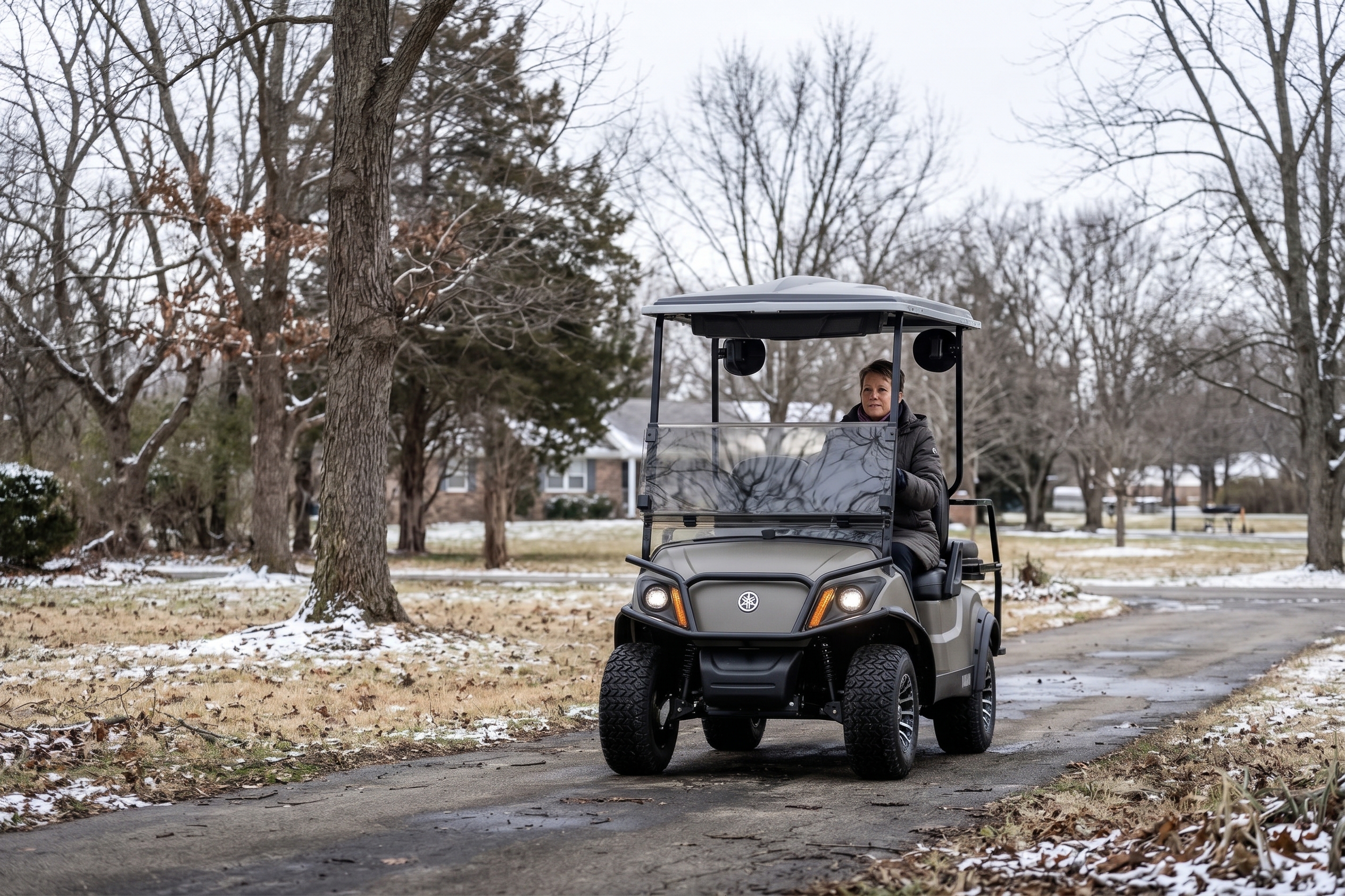
Every spring, we see the same situation. A customer parks their cart in October or November, puts it in the shed or throws a tarp over it, and doesn’t touch it again until the first warm weekend in April. They go to use it, and nothing happens. Nine times out of ten, the batteries drained down over the winter and won’t come back. Sometimes it’s rodents that got into the wiring, which happens more often than people think, especially out at the lake or in a barn. Occasionally it’s a battery case that cracked because the batteries weren’t charged going into winter, and now you have acid to clean up and a new set of batteries to buy.
Most of it is preventable. There are a handful of things worth doing before the weather turns cold, and if you take care of them, your cart will be ready when you need it in the spring. This holds true whether you have a Yamaha or a Club Car, gas or electric, lead-acid or lithium. Here’s what we tell customers when they come in and ask.
|
The Short Version: Both lithium and flooded lead-acid (FLA) handle winter storage fine if you follow the right steps. For lithium, charge the pack into the 80 to 90 percent range, put the cart in tow mode, and you’re set until spring. For FLA, charge the batteries fully, check that the water levels are good, put the cart in tow, and plan to check on it once a month. Where the two differ is cold-weather runtime: FLA actually holds up better than lithium when you’re driving in the cold. If any of this feels like more than you want to deal with, bring the cart to our Louisville or Calvert City location and we’ll winterize it for you. |
What a Kentucky winter actually does to a cart
Kentucky winters are not Minnesota winters, but they’re not nothing either. We get stretches of nights in the teens, some ice, and usually a snow or two that sticks around for a week. That’s enough to cause real problems if a cart isn’t ready for it.
Three things happen in cold weather that are worth paying attention to:
- The batteries get stressed. Both chemistries lose some capacity when it’s cold, but a battery that is kept at a healthy state of charge handles the stress a lot better than one that’s been allowed to run down.
- The rubber on the tires gets brittle. A cart that sits flat on cold concrete for three months will flat-spot, and the sidewalls can start to crack.
- Discharged batteries can freeze. A fully charged battery will not freeze under normal Kentucky winter conditions. A discharged one can, and when the electrolyte in a lead-acid pack freezes, the case will often crack. That is the single most expensive winter mistake we see.
Lithium vs. flooded lead-acid in winter
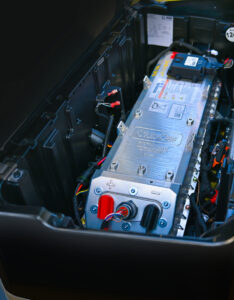 This is where there’s a lot of confusion, so let me separate it out. There are really two different questions, and the answer is different for each.
For winter storage, both chemistries do fine if you prep them correctly. Lithium is a little simpler because there’s no watering to check and the battery management system does some of the work for you. But a flooded lead-acid pack that’s been charged up, watered, and put in tow mode will come through winter just as well. Neither one is in a different league here. What matters is following the steps for the chemistry you have.
For running the cart in cold weather, flooded lead-acid actually holds up better. The chemistry just works better in the cold. Lithium takes a bigger hit to runtime when temperatures drop, so a cart you’d normally get 25 miles out of in July is going to give you noticeably less in January, and the drop is a little bigger with lithium than it is with FLA. The newer lithium packs are getting better at this. Some of them now have a heater built into the battery that warms the pack up to help with runtime, and on certain models like the Club Car Urban you can add a heated blanket to the pack as an accessory. If you drive the cart hard through the winter and you’re on lithium, those are worth asking about.
The one piece that applies to both chemistries: keep the batteries charged. A fully charged lead-acid battery handles freezing temperatures without any issue, but a partially discharged one does not. The electrolyte inside can freeze, the case can crack, and come spring you have a dead battery and acid to clean up. Lithium packs have more built-in protection against this, but even a lithium pack sitting at a low state of charge for months isn’t doing itself any favors.
What to do before you park it for the winter
If you’re the kind of owner who parks the cart around Thanksgiving and doesn’t touch it until the weather breaks in the spring, these are the steps worth taking before you walk away from it.
- For lithium: charge the pack into the 80 to 90 percent range. You don’t need to go all the way to 100 percent for storage. Then put the cart in tow mode, and that’s really the main thing. Lithium will take care of itself from there.
- For flooded lead-acid: charge the batteries fully, and check that the water levels are good before you walk away. A full charge drops the freezing point of the electrolyte and keeps the plates in good condition. If the water is low in any cell, top it off with distilled water. Then put the cart in tow. keeping them charged through the winter is the single most important thing you can do with FLA.
- Disconnect the main power or put the cart in tow. Nearly every cart has a way to kill the power, whether that’s a battery disconnect, a key switch, or a run/tow switch. Flip it to off or to tow before you walk away. Even a cart that appears shut off still has small parasitic draws pulling a tiny amount of current, and over three or four months that adds up enough to pull a battery down.
- Give it a wash. Mud, grass clippings, and road salt all hold moisture against the metal, which is how rust gets started. A quick hose-off before storage will save you trouble on the frame and the undercarriage.
- Inflate the tires. This is the step most owners skip. An underinflated tire sitting on cold concrete will flat-spot and start to crack along the sidewall. Check the pressure listed on the sidewall and bring the tires up to where they should be. If you want to go a step further, blocks or jacks under the frame will take the weight off the tires completely, but most owners don’t go that far, and that’s fine as long as the pressure is right.
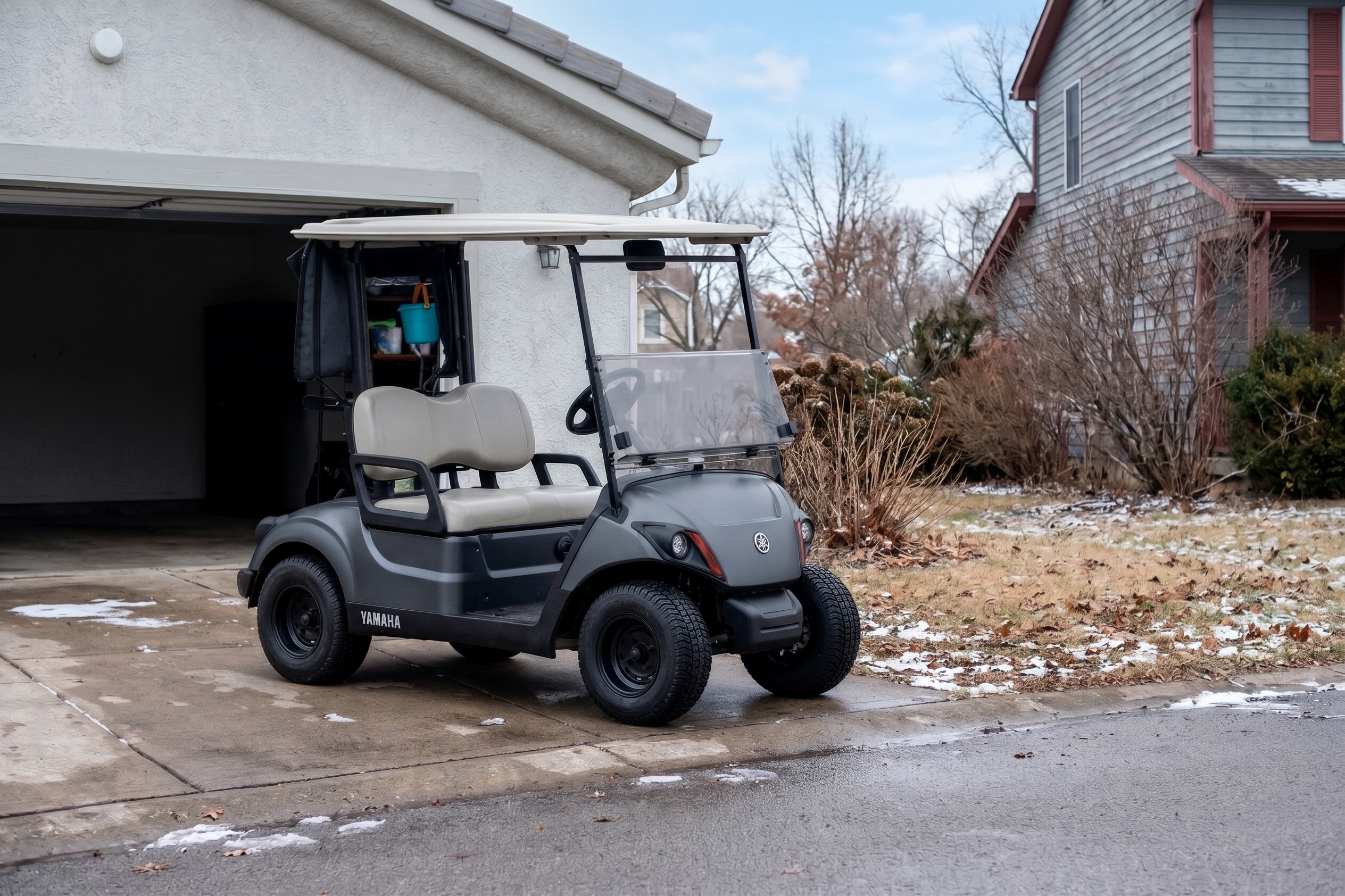
- Store it dry. A garage is best. A shed is a good second. A tarp is better than nothing. If the cart has to stay outside under a cover, make sure water can run off and air can move underneath, or condensation will build up on the cart and create its own problems.
- Protect against rodents. Mice and squirrels love getting into a parked cart because it’s quiet, dry, and full of wiring to chew on. We see wiring damage every spring that started with a mouse looking for somewhere warm. Mothballs, peppermint oil pads, or a few traps placed near the storage area go a long way.
 What to check on during the winter
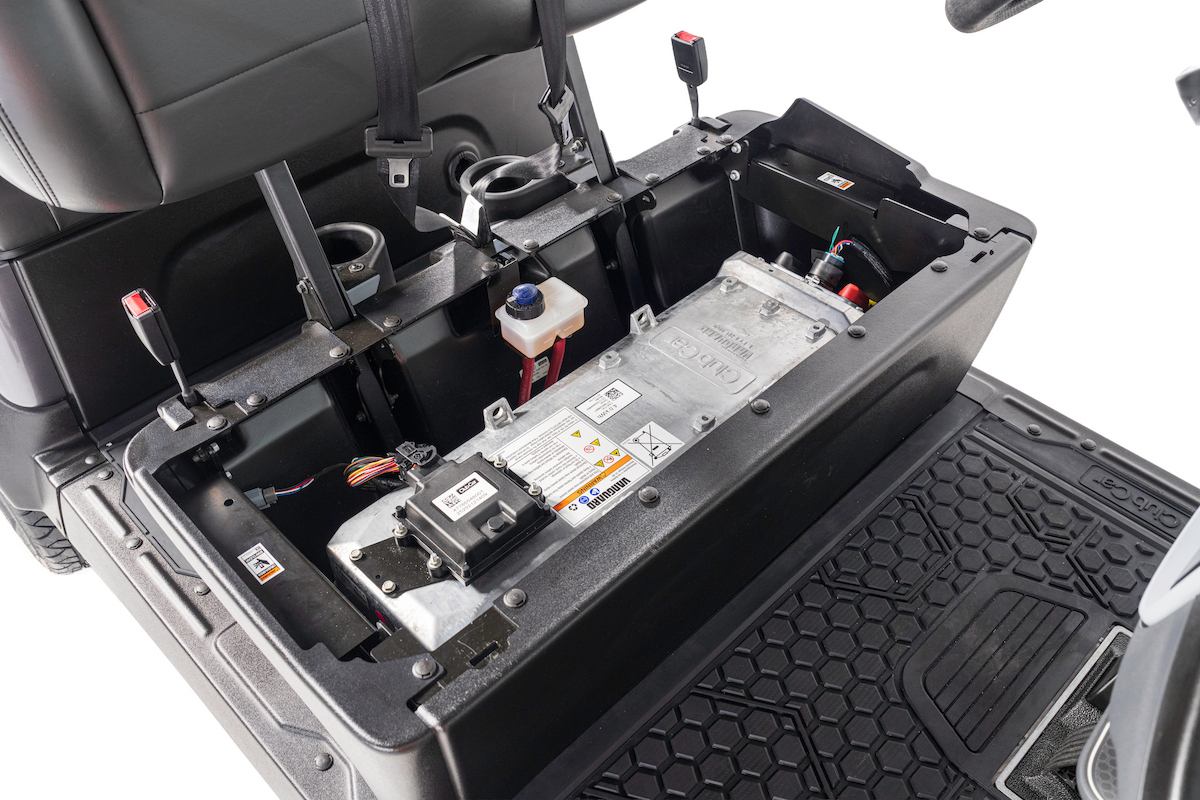
If you have flooded lead-acid batteries, plan on going out to the cart about once a month, maybe when you’re already grabbing something else out of the shed. Check the voltage, and if it has dropped, put the charger on for a few hours. While you’re there, take a quick look at the water levels. That one monthly habit is the difference between a cart that fires right up in the spring and one that needs a full battery replacement.
Lithium can mostly be left alone. The battery management system does more of the work. Check on it once or twice over the winter to make sure no mice have built a nest and nothing has shifted, but beyond that it will take care of itself.
One more thing worth mentioning. If a January day warms up into the 50s or 60s, take the cart out and drive it around for 10 or 15 minutes. It’s good for the batteries, good for the tires, and good for the seals. Just make sure the cart is charged back up before you park it again.
If you’re using the cart through the winter
Plenty of our customers do, especially the rural owners and the farm operators. If that’s you, there are a few things worth knowing.
The range you get in cold weather will be shorter than what you’re used to in the summer. That’s true across every battery type and every brand. What surprises some owners is that the drop is actually a little bigger with lithium than it is with flooded lead-acid. The chemistry of lead-acid just handles cold weather runtime better. If you normally get 25 miles on a charge in July, expect less than that in January, and expect the hit to be a bit more pronounced on a lithium cart than on an FLA cart. Nothing is wrong with the cart. That’s just how batteries behave in the cold.
If you’re on lithium and the cold weather runtime is a real problem for how you use the cart, ask us about the newer packs with battery heaters built in, or the add-on heated blankets available for certain models. Those are specifically designed to help with cold weather performance.
The same thing goes for tires. They lose pressure faster than you’d expect. A tire that reads correct at 70 degrees will be low once the temperature drops into the 20s. Get in the habit of checking before every use.
Keep the cart as dry as you can between uses. If you’ve been out in rain or snow, wipe it down with a rag. The electrical connections to protect are under the seat and behind the dash. If water gets into those connections and freezes, you have a problem that won’t show up until you turn the key and nothing happens.
When to bring the cart in to us
Winter prep is not complicated. For most owners it’s about an hour of work on a Saturday afternoon, and that’s the end of it.
That said, some owners would rather not deal with it, and some situations really are better handled by our service team. If you have flooded lead-acid batteries that have been through five or six winters already, this is the winter where that extra attention matters most. If the cart sits in a shed with no power access and there’s no way to run a charger out there, let us look at it before you park it for the season. And if you have anything else that’s been nagging at you, whether that’s a clutch that doesn’t feel right or brakes that have gone a little soft, now is the time to deal with it. Nobody wants to discover that in April when the weather breaks and the cart won’t move.
Both of our service departments offer winterization. We charge the batteries, check water levels on FLA packs, go over the connections, check the tires, clean the undercarriage, and give the cart a full inspection. If we find something that needs attention, we’ll tell you what we see and let you decide how to handle it. If everything looks good, you drive the cart home ready to park for the winter.
|
Schedule a Winterization: Call our Louisville or Calvert City location to get on the service schedule before the first hard freeze. The weeks between now and Thanksgiving fill up quickly. Owners who wait until December end up behind a line of other folks who had the same idea. |
The bottom line
A cart that gets some attention in the fall will start right up in the spring. A cart that gets ignored usually turns into a repair bill larger than the winter prep would have cost in the first place. We see it every year.
Both lithium and flooded lead-acid handle winter storage well if you follow the right steps for the chemistry you have. Lithium is a little simpler. FLA needs the water check and the monthly voltage check. Lead-acid actually holds up a little better than lithium when you’re driving in cold weather, which surprises some owners. Either way, charge the batteries, put the cart in tow, store it dry, and don’t skip the prep. The owners who do are the ones we see in April with problems that could have been avoided. Spring is a lot more enjoyable when the cart starts the first time you turn the key.
A few quick answers
How do I prepare my golf cart for winter in Kentucky? Charge the batteries, disconnect the main power or put the cart in tow mode, inflate the tires, clean the cart, and store it somewhere dry. If you have lithium, charge the pack into the 80 to 90 percent range and you’re set. If you have flooded lead-acid, charge the batteries fully, check the water levels, and plan to check in on the pack about once a month through the winter.
Can I leave my golf cart outside in the winter? You can, but a garage or shed is much better. If it has to stay outside, use a cover that lets air move so condensation doesn’t collect, make sure water can run off, and check the batteries more often than you would for a cart in a dry space.
Does cold weather hurt golf cart batteries? Cold weather affects both lithium and flooded lead-acid, but in different ways. For storage, a battery that’s at a healthy state of charge going into winter will handle Kentucky cold fine, whether it’s lithium or FLA. For runtime, flooded lead-acid actually holds up a little better than lithium in the cold. The newer lithium packs often have built-in heaters to help with cold-weather runtime.
How often should I charge my golf cart battery during winter storage? For flooded lead-acid, check the voltage once a month and charge it if it’s dropped. A trickle charger left on a timer works well for owners who want to set it and forget it. For lithium, charging to 80 to 90 percent before storage is usually enough, and the battery management system takes care of the rest.
Is lithium or lead-acid better for a golf cart in cold weather? For winter storage, both chemistries do fine with the right prep. For driving in the cold, flooded lead-acid actually handles the cold a little better than lithium does because of the underlying chemistry. The newer lithium packs with built-in heaters, and the heated blanket add-ons available for some models, are designed to close that gap.